February 28 reinforces the importance of diagnosis on World Rare Disease Day
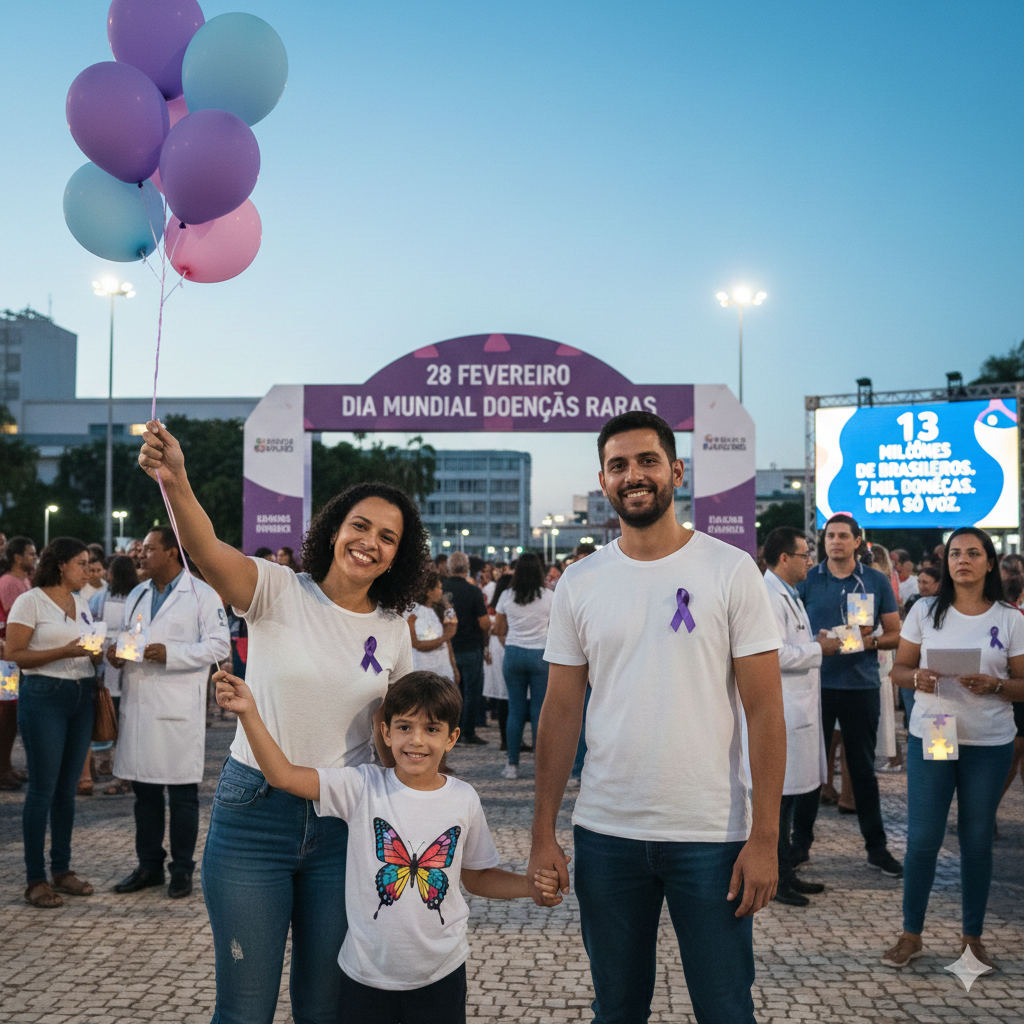
This February 28th, the calendar marks more than the end of a month; marks the wake-up call for a journey of overcoming that affects millions of Brazilians. World Rare Disease Day was chosen to illuminate the reality of families who often live for years in a true medical labyrinth. Without an accurate diagnosis, time becomes the greatest adversary, and the date serves to remind us that, although each pathology is rare, support and access to healthcare must be a common and immediate right.
In Brazil, it is estimated that 13 million individuals live with one of the seven thousand cataloged rare diseases. The biggest obstacle, however, arises even before the disease is identified, the so-called "diagnostic odyssey". On average, it takes a patient five to ten years to discover the cause of their symptoms, going through countless specialists and inconclusive tests. This delay is critical, since around 75% of these diseases manifest themselves in childhood.
OBSTACLES - Due to their early onset in life, resulting from the fact that 80% of rare diseases have a genetic cause, and the existence of different treatment strategies for numerous rare conditions, experts reinforce the importance of the expanded Heel Test in the SUS. This tool is capable of early detection of dozens of conditions before irreversible damage occurs, completely changing the child's prognosis.
In Brazil, it is estimated that 13 million individuals live with one of the seven thousand cataloged rare diseases. The biggest obstacle, however, arises even before the disease is identified, the so-called "diagnostic odyssey". On average, it takes a patient five to ten years to discover the cause of their symptoms, going through countless specialists and inconclusive tests. This delay is critical, since around 75% of these diseases manifest themselves in childhood.
OBSTACLES - Due to their early onset in life, resulting from the fact that 80% of rare diseases have a genetic cause, and the existence of different treatment strategies for numerous rare conditions, experts reinforce the importance of the expanded Heel Test in the SUS. This tool is capable of early detection of dozens of conditions before irreversible damage occurs, completely changing the child's prognosis.
In addition to diagnosis, the journey involves the high cost of treatments, so-called "orphan drugs", and the need for multidisciplinary teams. "Rare does not mean less important", recalls Dr. Roberto Giugliani, geneticist and executive director of Casa dos Raros. "The celebration of this February 28th is not just about medicine, but about the right to citizenship, inclusion and support for families who fight daily battles against invisibility", he highlights.